Toilet Keeps Running? How to Check and Fix the Flapper
Running toilet
Toilet keeps running? Test the flapper with food coloring, check the chain and seat, then clean or replace it with the right 2-inch or 3-inch size.
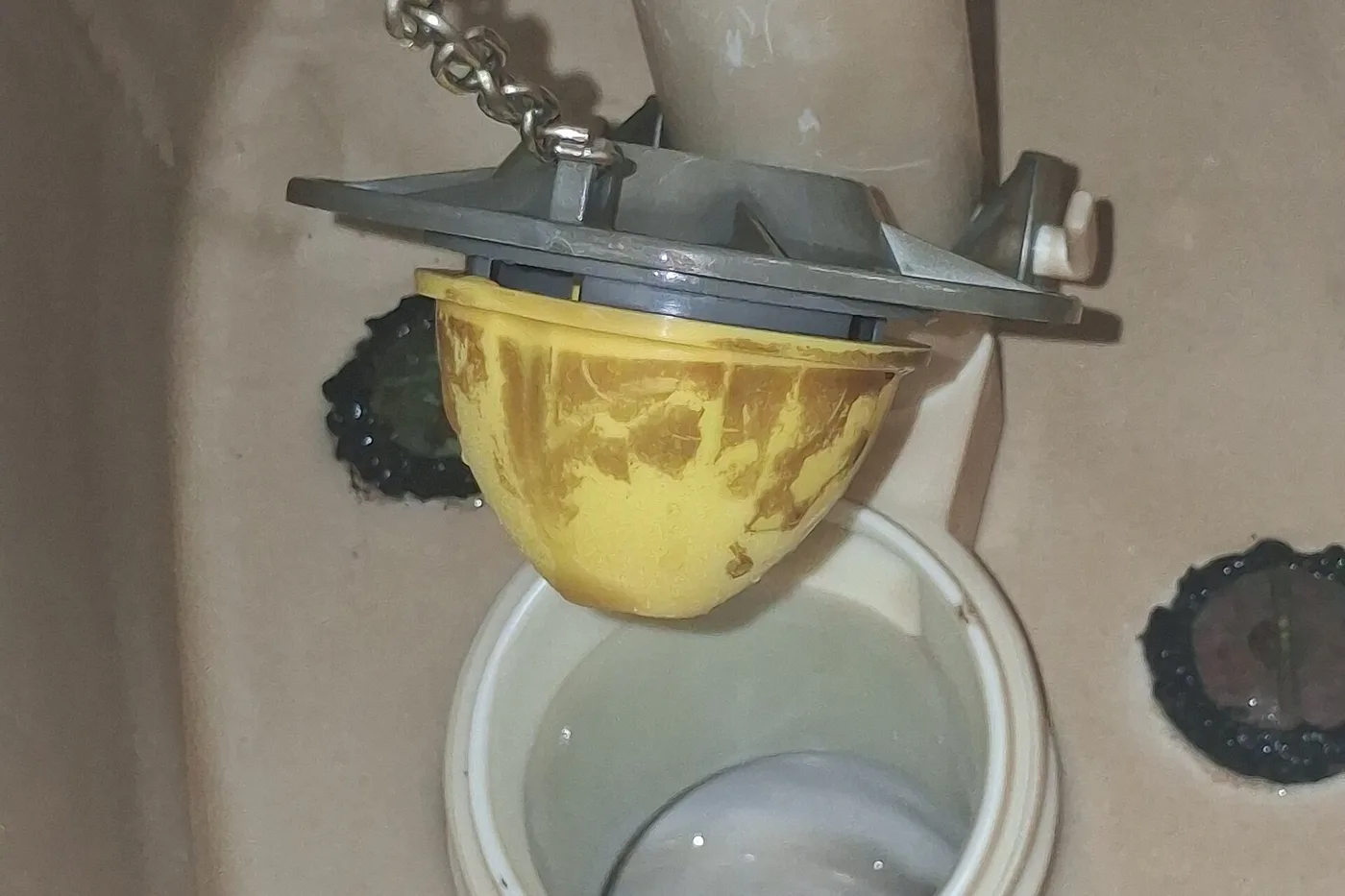
Quick answer: a toilet that keeps running, or refills by itself every few minutes, is most often leaking past the flapper, the rubber seal at the bottom of the tank. Put a few drops of food coloring in the tank and wait 15 to 20 minutes without flushing. If color shows up in the bowl, the flapper (or the seat it rests on) is leaking. Check the chain slack, clean the seat, and if the flapper is warped, stiff, or slimy, replace it with one of the same size (2-inch or 3-inch). If the water is instead spilling over the top of the overflow tube, the flapper is not the problem; the fill valve is.
Is the flapper really the cause?
Take the tank lid off, set it on a towel, and run these three checks before buying anything.
1. Dye test
Add a few drops of dark food coloring or a toilet dye tablet to the tank (not the bowl). Do not flush for 15 to 20 minutes. Colored water in the bowl means water is getting past the flapper. Flush afterward so the dye does not stain.
2. Listen for refill cycling
A toilet that hisses or runs for a few seconds on its own every so often, with nobody using it, is refilling water that slowly leaked into the bowl. That “phantom flush” pattern points to the flapper. More on that in Toilet ghost flushes or refills on its own.
3. Look at the water level in the overflow tube
Watch a full refill. The water should stop about ½ to 1 inch below the top of the overflow tube (the open pipe in the middle of the tank), or at the water line mark if your tank has one.
- Water stops below the tube and later drops slowly: flapper or flush-seat leak. Keep reading.
- Water rises to the rim and pours down inside the tube while the valve keeps hissing: fill level or fill valve. Go to Toilet water running into the overflow tube.
- A thin stream from the small refill tube into the overflow during refilling: normal. It refills the bowl and stops when the tank is full.
A quick confirm: press the flapper closed with your hand for about 30 seconds. If the running stops while you hold it, the leak is at the flapper (hold the flapper closed to confirm a leak).
How to check and fix a toilet flapper
1. Shut off the water and drain the tank
Turn the supply valve behind the toilet clockwise until it stops. Hold the handle down to flush and let the tank empty. Sponge out the last bit so you can see the bottom. See shut the water off and flush before a swap.
2. Check the chain
With the flapper closed, the chain from the handle lever should have a little slack, about ½ inch, or roughly one finger width.
- Too tight: it holds the flapper slightly open and the toilet runs nonstop.
- Too loose: extra chain can get caught under the flapper and keep it from sealing, or the flush is weak.
- Twisted or hooked crooked: the flapper lands off-center.
Move the clip to a different link and test. Details: adjust toilet flapper chain slack and seat it evenly with no twist in the chain.
3. Inspect the flapper
Unhook the chain and pop the flapper’s ears off the pegs on the overflow tube (or slide its ring off the tube). Look and feel for:
- Warping or curled edges. It no longer sits flat.
- Stiff, hard, or cracked rubber. It no longer squeezes into a seal.
- Slimy, swollen, or soft rubber that leaves black residue on your fingers. In-tank cleaning tablets can wear flappers this way (skip tank tablets that wear the flapper).
Any of these means replace it. Flappers are cheap and wear out with age.
4. Clean the flush valve seat
Run a finger around the round rim the flapper lands on. Mineral scale, rust, or grit there can break the seal even with a good flapper. Wipe it with a soft scrub pad or a cloth until it feels smooth all the way around. Do not use anything that scratches. See wipe the flush valve seat.
If the seat itself is chipped, cracked, or deeply pitted, a new flapper will not fix it. That needs a seat repair kit or a new flush valve.
5. Replace the flapper with the right size
Match the new flapper to the opening:
- 2-inch flappers fit the more common, older-style flush valves.
- 3-inch flappers fit larger flush valve openings found on many newer toilets.
Measure across the drain opening in the bottom of the tank, or take the old flapper to the store. Some toilets, including many dual-flush and canister-style designs, use a brand-specific seal instead of a standard flapper. Look for the maker’s name and model number inside the tank and buy the matching part. Example searches: 2-inch toilet flapper · 3-inch toilet flapper.
To install: hook the ears onto the overflow tube pegs (cut off the ring on the back if your tube has pegs, or leave it on if your tube has none), make sure it drops centered on the seat, clip the chain with about ½ inch of slack, and trim extra chain so it cannot get pulled under.
6. Turn the water back on and test
Open the supply valve slowly, let the tank fill, and flush two or three times. Watch the flapper drop flat each time. Then repeat the dye test, or pencil-mark the waterline and check it after twenty minutes. Also check the supply valve for drips (check the supply valve after a fix).
Common mistakes
- Buying the wrong size. A 2-inch flapper on a 3-inch opening (or the reverse) will not seal. Check the opening first.
- Chain too tight after the swap. A new flapper with a tight chain runs just like the old one.
- Skipping the seat cleaning. Grit on the seat keeps even a brand-new flapper leaking.
- Replacing the flapper for an overflow problem. If water spills over the top of the overflow tube, it is the fill valve or float setting.
- Ignoring the handle. A sticky handle or bent trip lever can hold the flapper up. See bent trip lever needs a kit, not just a flapper and tighten the handle nut.
- Leaving dye tablets or bleach pucks in the tank. They can shorten the life of the new flapper.
Toilet flapper FAQ
How do I know if my toilet flapper is bad?
The usual signs are color in the bowl after a dye test, the toilet refilling on its own with nobody using it, and a flapper that feels warped, stiff, or slimy. If holding the flapper closed by hand stops the running, the flapper or seat is the leak.
Why does my toilet keep running after I replaced the flapper?
Common reasons are the wrong size, a chain that is too tight or caught underneath, a dirty or damaged seat, or a fill valve that is overfilling the tank. Walk through Toilet still runs after a new flapper.
Is my toilet flapper 2-inch or 3-inch?
Measure the drain opening at the bottom of the tank where the flapper sits. A roughly 2-inch opening takes a 2-inch flapper, and a roughly 3-inch opening takes a 3-inch one. The toilet model number inside the tank can confirm it.
Can I just clean a toilet flapper instead of replacing it?
If the rubber is still soft and flat and the problem was grit or scale, cleaning the flapper and the seat can fix it. If the rubber is warped, hard, cracked, or swollen, replace it.
How do I stop my toilet from running right now?
Lift the tank lid and press the flapper down or jiggle the handle so it reseats. If it keeps running, turn the supply valve behind the toilet clockwise to shut off the water until you can fix it.
Why does my toilet run for a few seconds every so often?
That is usually a slow flapper leak letting tank water trickle into the bowl until the fill valve tops it off. After a water shutoff, debris can also cause it (toilet runs after a water shutoff).
Honest stop
Cracked tanks, a cracked or chipped flush valve seat, loose bowl bolts that seep at the floor, or a wax ring failure under the bowl are not flapper jobs. Call a plumber for those. This guide stays inside the tank.
More help
- Same niche: Adjust toilet flapper chain slack so it seats flat · Toilet flapper fine — keep refill tube above waterline · Toilet flapper fine — bent trip lever needs a kit not just a flapper · Check toilet fill valve float height · Running toilet — check the supply valve for drips after a fix · Toilet flapper — dual-flush chain tangle keeps toilet running · Toilet flapper fine — dual-flush float can still keep it open · Toilet flapper path — match fill valve to left vs right tank hole · Toilet flapper — set chain slack to about one finger width · Toilet flapper — hold it closed to confirm a leak · Toilet flapper — pencil-mark the tank waterline after a quiet fill · Toilet flapper — seat it evenly with no twist in the chain · Toilet flapper — shut the water off and flush before a swap · Running toilet — skip tank tablets that can wear the flapper · Toilet flapper — tighten the handle nut for partial lift · Toilet ghost flushes or refills on its own · Toilet flapper fine — fix handle bushing sideways play · Toilet still runs after a new flapper · Toilet water spilling into the overflow tube · Toilet flapper — check a twenty-minute pencil-mark drop · Running toilet — wipe the flush valve seat under the flapper · All running toilet guides
- Related fixes elsewhere: Check the indoor dryer vent lint trap screen · Outdoor dryer vent flap stuck closed